Product details description
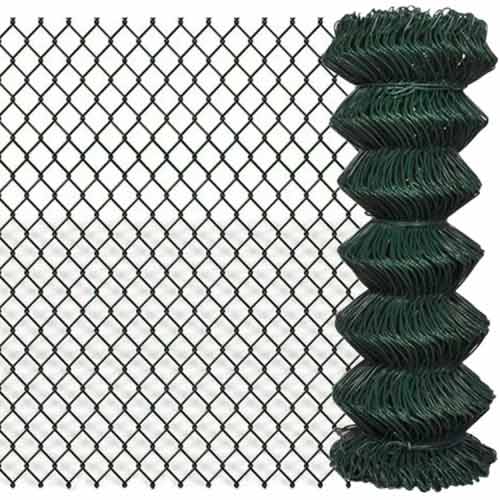
The diamond pattern of chain link fences is a defining feature that
directly influences the fence’s mesh strength, functionality, and suitability
for specific applications. Formed by interweaving galvanized or vinyl-coated
steel wires into a continuous diamond-shaped grid, this pattern balances
structural integrity with flexibility, making chain link fences a popular choice
for security, boundary definition, and crowd control. Analyzing the diamond
pattern involves evaluating two critical parameters: mesh strength, which
determines the fence’s ability to resist impact and intrusion, and opening
specifications, which dictate the fence’s visibility, airflow, and ability to
contain or exclude objects. A thorough understanding of these factors is
essential for selecting the right chain link fence for residential, commercial,
or industrial use.
Mesh strength is primarily determined by the gauge (thickness) of the wire
used in the diamond pattern and the pattern’s stability. Thicker-gauge wires
(lower gauge numbers) create stronger meshes, as they can withstand greater
tension and impact without bending or breaking. For example, 9-gauge wire is
significantly stronger than 11-gauge wire and is ideal for high-security
applications like industrial perimeters or correctional facilities. The
interweaving process also contributes to mesh strength—wires that are tightly
woven and securely crimped form a stable diamond pattern that resists stretching
or distortion. In contrast, loosely woven meshes with poorly crimped connections
are prone to sagging and can be easily breached, reducing the fence’s overall
security.
Opening specifications, measured by the diamond’s side length or diagonal,
are equally important and vary based on the fence’s intended use. Smaller
diamond openings (e.g., 1.25-inch or 2-inch diagonals) provide enhanced security
by preventing unauthorized climbing and excluding small animals or debris. These
are commonly used in residential yards, playgrounds, or construction sites where
containment and safety are priorities. Larger diamond openings (e.g., 3-inch or
4-inch diagonals) offer greater visibility and airflow, making them suitable for
agricultural applications, such as enclosing livestock, or for commercial
properties where visibility of the premises is desired. The choice of opening
size also affects the fence’s wind resistance—larger openings allow wind to pass
through, reducing lateral pressure on the fence structure.
The relationship between diamond pattern dimensions and fence performance
is a key consideration in pattern analysis. A balanced pattern, where the
diamond’s height and width are proportional, ensures uniform strength across the
fence panel. Irregular diamond patterns, often caused by improper installation
or low-quality wire, can create weak points where the fence is more susceptible
to damage. Additionally, the diamond pattern’s orientation can influence the
fence’s functionality—horizontal diamonds may be easier to climb than vertical
ones, so vertical orientations are preferred for security applications.
Manufacturers often provide standard pattern specifications, but custom patterns
can be created to meet unique performance or aesthetic requirements.
Practical applications of diamond pattern analysis extend to material
selection and maintenance. For corrosive environments, such as coastal areas,
vinyl-coated chain link fences with a tight diamond pattern offer enhanced
durability, as the coating protects the wire from saltwater corrosion while
maintaining mesh strength. Regular maintenance, including inspecting the diamond
pattern for signs of stretching, wire breakage, or crimp failure, ensures that
the fence remains strong and functional. By analyzing the diamond pattern’s mesh
strength and opening specifications, property owners can select a chain link
fence that not only meets their security and containment needs but also provides
long-lasting performance in their specific environment.
Previous article:
DIY Chicken Wire Projects: Creative Uses Beyond Traditional Poultry Housing
Next article:no more