Product details description
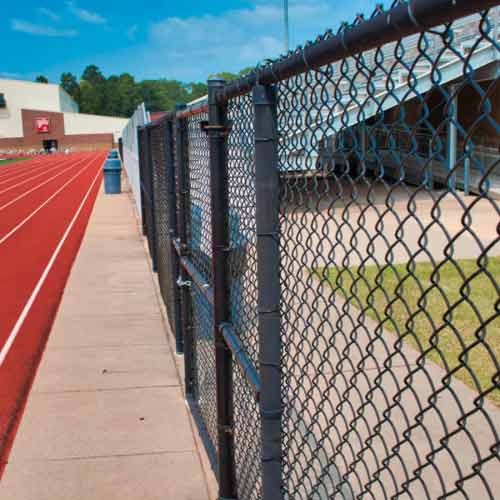
Installing chain link fence panels on sloped or uneven terrain presents a
challenge to achieve both a secure, taut fence and a professional appearance.
Unlike continuous roll fencing, pre-fabricated panels offer less flexibility but
can be successfully installed on slopes using specific techniques: stepping or
racking. The choice between these methods depends on the slope's severity,
desired look, and functional requirements of the fence.
The first step is meticulous planning and layout. Use string lines and
stakes to mark the exact fence line. Measure the slope accurately; a gradual
slope (less than 5 degrees) might be managed with slight adjustments, while a
steeper slope requires a deliberate method. For panels, the stepped method is
often the most practical and visually clean option. This involves installing the
fence panels in horizontal sections, each following the contour of the ground at
different heights, creating a staircase effect. The key is to ensure each panel
remains level from left to right, with the bottom rail following the ground's
incline but the fabric hanging vertically.
To execute the stepped method, you will need to cut and adjust the end
posts (line posts and terminal posts) to different heights. Install your first
panel on level ground or at the top/bottom of the slope as a reference. For the
next panel downhill or uphill, the end post must be set lower or higher so that
the top rail of the new panel aligns perfectly with the top rail of the previous
panel. The gap created beneath the panel on the downhill side is filled with
tension wire, additional mesh, or landscaped with rocks or plants to prevent
animals from going under. This method maintains a straight, level top line,
which is aesthetically pleasing and secure.
For very gentle slopes, the racking method can be used, where the entire
panel is tilted to follow the slope. This involves attaching the chain link
fabric to the posts at an angle, allowing the diamond pattern to distort
slightly. With pre-fabricated panels, this method is trickier than with roll
fabric, as the rigid frame resists distortion. It may require leaving a larger
gap under the panel on the high side and potentially adding a tension wire along
the bottom. Racking is less ideal for panels as it can put stress on the frame
and may not look as tidy, but it can be suitable for short slopes where stepping
would be too dramatic.
Key installation tips include using a spirit level to ensure posts are
plumb and panel top rails are level, even as post heights vary. Secure panels to
posts with heavy-duty panel clamps or bolts designed for the frame. On uneven
ground, you may need to adjust the length of the bottom rails or use custom-cut
panels for specific sections. Properly tensioning the mesh within each panel
frame during manufacturing is assumed; your job is to ensure the panel frames
themselves are securely and squarely connected. Finally, consider using privacy
slats that can bend to follow a stepped configuration, but ensure they are rated
for such installation.
Previous article:
Enhancing Access Control with Chain Link Fence Door
Next article:
Chain Link Fence Manufacturing Process: From Steel Wire to Diamond Mesh Construction